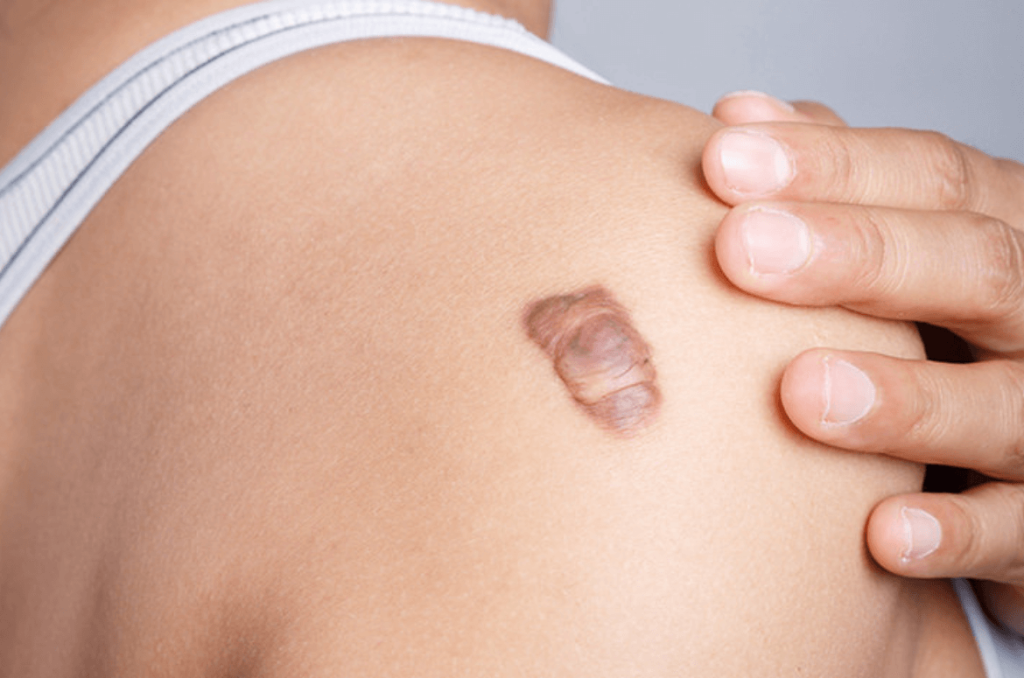
Keloid, also known as keloid disorder and keloidal scar, is the formation of a type of scar which, depending on its maturity, is composed mainly of either type III (early) or type I (late) collagen. Keloids can occur anywhere on your body, but they develop more commonly over the upper chest, neck, ears, shoulders, scalp and back. Keloids should not be confused with hypertrophic scars, which are raised scars that do not grow beyond the borders of the original cut or wound.
Keloids scars are an extremely distressing condition. Keloids are difficult to treat and can be a source of embarrassment especially if they occur in prominent areas such as the face or ears. At Zaria we can offer a range of treatments aimed at alleviating the severe physical and emotional distress that result from keloid condition.
What causes keloids?
Experts don’t know exactly what causes a keloid scar to form instead of a typical scar. If the wound takes longer to heal, the patient is at a greater risk of developing excess scar tissue. Keloids develop as a result of an overgrowth of collagen type III over a site of a previous skin injury which is then slowly replaced by collagen type I.
Sometimes, a surgical scar turns into a keloid. Some women who have had a caesarean section (C-section) or hysterectomy get keloids after the surgery. Some people get keloids after burns, acne or chickenpox, insect bites, or vaccination injection.
Keloids can also develop after procedure such as ear piercing or tattooing. Some men who shave their heads and face develop keloids on the scalp and on their beard area. Although keloids develop more commonly after an injury, it is possible for a keloid to develop spontaneously. The risk of developing keloids is higher in those with African, Asian and Latino ancestry. Whites can also develop keloids especially on the central chest after chest surgery. In susceptible ethnic groups, keloids can also develop after certain cosmetic procedures such as aggressive laser or deep chemical peels.
What do Keloids look like?
Keloids are firm, rubbery lesions or shiny, fibrous nodules. Their colour can vary from pink to the colour of the person’s skin or red to dark brown in colour. Keloids can grow to significant size. A keloid scar is a benign growth and is not cancerous, but can sometimes be accompanied by symptoms such as itchiness and change in texture. In severe cases keloid scars can affect the movement of the skin.
How can Keloids be treated?
Keloids present a therapeutic challenge that must be addressed, as these lesions can cause significant pain, pruritus (itching), and physical disfigurement. They may not improve in appearance over time and can limit mobility if located over a joint. For those individuals who are susceptible to developing keloids it is advisable to avoid certain cosmetic procedures except if absolutely necessary. Treatment options for a keloid formation depend on a number of factors, including its size, location, and whether the scar is causing pain or causing difficulty with moving.