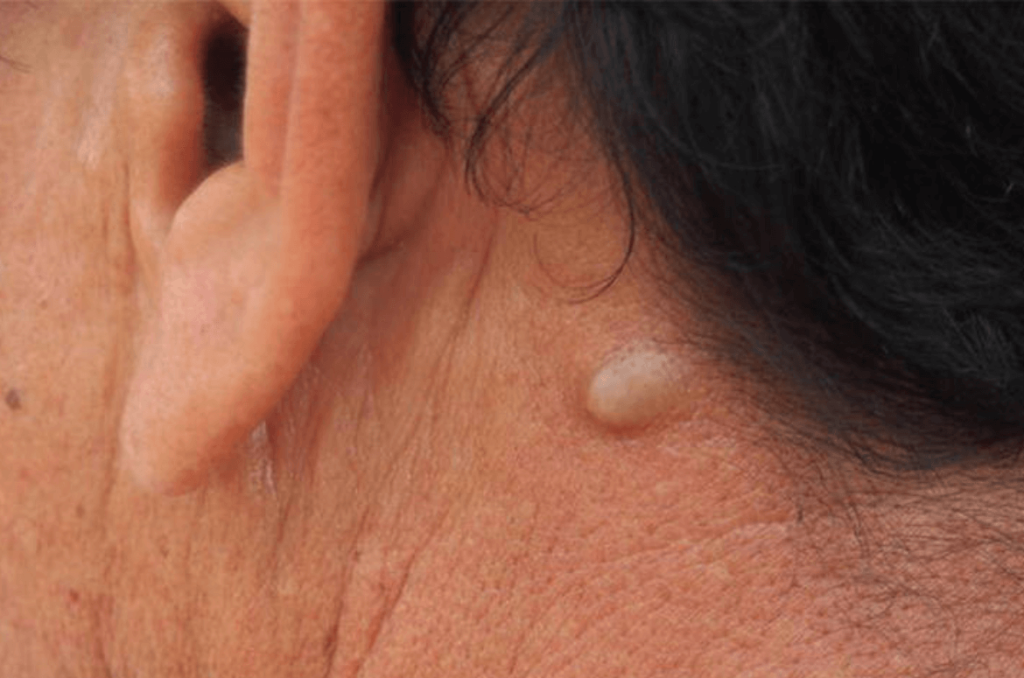
Cysts are common and occur on different areas of the body. A cyst is a closed sac of tissue filled with fluid or air. Most cysts are benign however there are exceptions. Cysts can become infected and also be a cause for cosmetic concern.
What causes cysts?
Epidermoid cysts develop on the top layer of the skin. They are filled with dead skin. Sebaceous cysts originate from the sebaceous glands. The can be found on the entire body except the palms of the hands and the soles of the feet. Sebaceous glands produce sebum which is an oil based substance. Pilar cysts form at the bottom of hair follicles.
The fluid inside contain keratin, a hard substance produced by the skin. Cyst can develop if the gland or duct becomes damaged or blocked. This can happen as a result of trauma such as a scratch, a surgical wound or a skin condition such as acne. Cysts can also form because of a deformed duct or genetic condition such as basal cell nevus syndrome.
What do they look like?
Cysts present as round or oval swelling beneath the skin. Epidermoid cyst is a small lump found on the face, neck, back. They look like skin coloured bump filled with a cheesy thick keratin debri. They may become swollen, red, and painful.
They are firm and mobile. The skin over the top of the cyst may have a small punctum or opening. Pilar cysts are mainly found on the scalp, but can develop anywhere on the body. The cysts are firm to touch but smooth on texture. They don’t contain pus and are usually not painful.
What treatment is available?
Cysts typically don’t go away on their own, although they may shrink and then grow again. Squeezing the contents of the cyst out can lead to inflammation and infection. It can also lead to scarring and is therefore not recommended. Cysts can be drained or excised or removed. Infected cysts should be treated with antibiotics and if they are swollen and painful they are treated with drainage much like an abscess Drainage involves lancing the cyst and squeezing the contents out.
This is a very quick procedure. When drained cysts are more likely to recur. Surgical removal is therefore the most effective method for complete resolution. Complete excision involves making an incision on the skin, freeing the sac from the surrounding tissue with complete removal and suturing of the skin incision. The cosmetic result is normally excellent.